The defining mistake in most public conversations about street safety is the word random. An assault is rarely random. Even in places with low overall crime, like Singapore, the events that do happen tend to follow a shape. The predator selects. The selection happens in three to five seconds, often before the person being selected has registered the predator at all. This is called the interview, and the people who do it for a living read four things.
You can change all four. The work takes about three minutes a day until it becomes default.
What the interview is
The interview is the predator's risk calculation. It is the same one a fox makes about a chicken or a confidence trickster makes about a mark. The question is simple. If I do the thing I am thinking about doing to this person, what is the probability it works, and what is the cost if it does not?
The probability and cost are read off the person. The reading takes seconds. It is not a conscious process for most predators and you do not need to convert it into one to defend against it. You only need to know what they are reading.
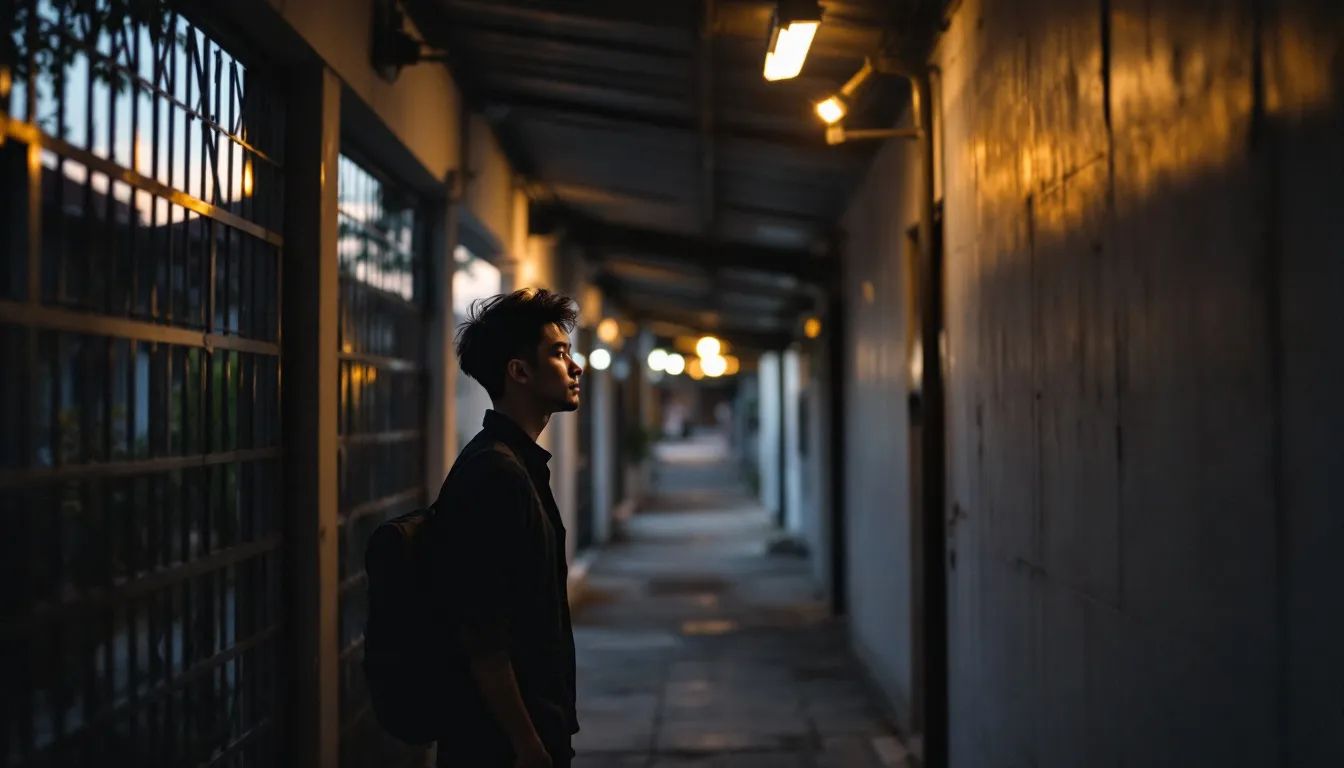
The four cues, in order of weight
The first is attention. A person who has not seen the predator is the easiest target on the street. A person who has, even glancingly, is a harder one. The work here is small and consistent. Look up. Scan the doors and the corners every fifteen or twenty seconds. Glance back at intervals. Predators almost never approach a target who has clocked them.
The second is posture. Not gym posture. Operator posture is open, balanced, and ready to move. Shoulders are back not because a teacher told you so but because that is what a person standing in their own body looks like. Predators read closed posture as compliance. They read open posture as risk.
The third is location use. The student who walks down the centre of the lit corridor at midnight is reading as costly. The student who hugs the wall in the shadow is reading as cheap. You are not paranoid for choosing the lit centre line. You are doing inventory management. You are making yourself the wrong inventory.
The fourth is the device. Headphones in, eyes on the screen, both hands occupied is the classic interview-passes-easily profile. None of those need to disappear. They need to be downgraded. One earbud out. Phone in the off-hand. Eyes up between scrolls.
What three minutes a day actually means
You do not need to add a routine. The training is to mark the transitions. Stepping out of your office at 9pm is a transition. The MRT car is a transition. The lift home is a transition. At each one, run the four cues against yourself for ten seconds. Eyes up. Body open. Pick the lit line. Free a hand.
After about a fortnight the cues run themselves. Students report that they no longer remember to do the check because they no longer remember not doing it.
Carrying it without becoming paranoid
The line between awareness and anxiety is whether the work makes the world larger or smaller. Done right, awareness opens the world up. You see more of it. You see the architecture of safety embedded in the city, where the cameras are, where the lit roads run, which exits work after hours.
Done wrong, it shrinks the world. You stop going places. You stop trusting people. You scan the train for threats instead of friends.
The check is whether you can be loose with it. The operator at the dinner table has no idea where the door is in any conscious sense. The operator knows in the same way a driver knows the speed of the car in the next lane, peripherally, automatically, and only when relevant. That is the level the training is for.
Three minutes of attention is trainable the same way anything else is. The programmes start there rather than with technique.