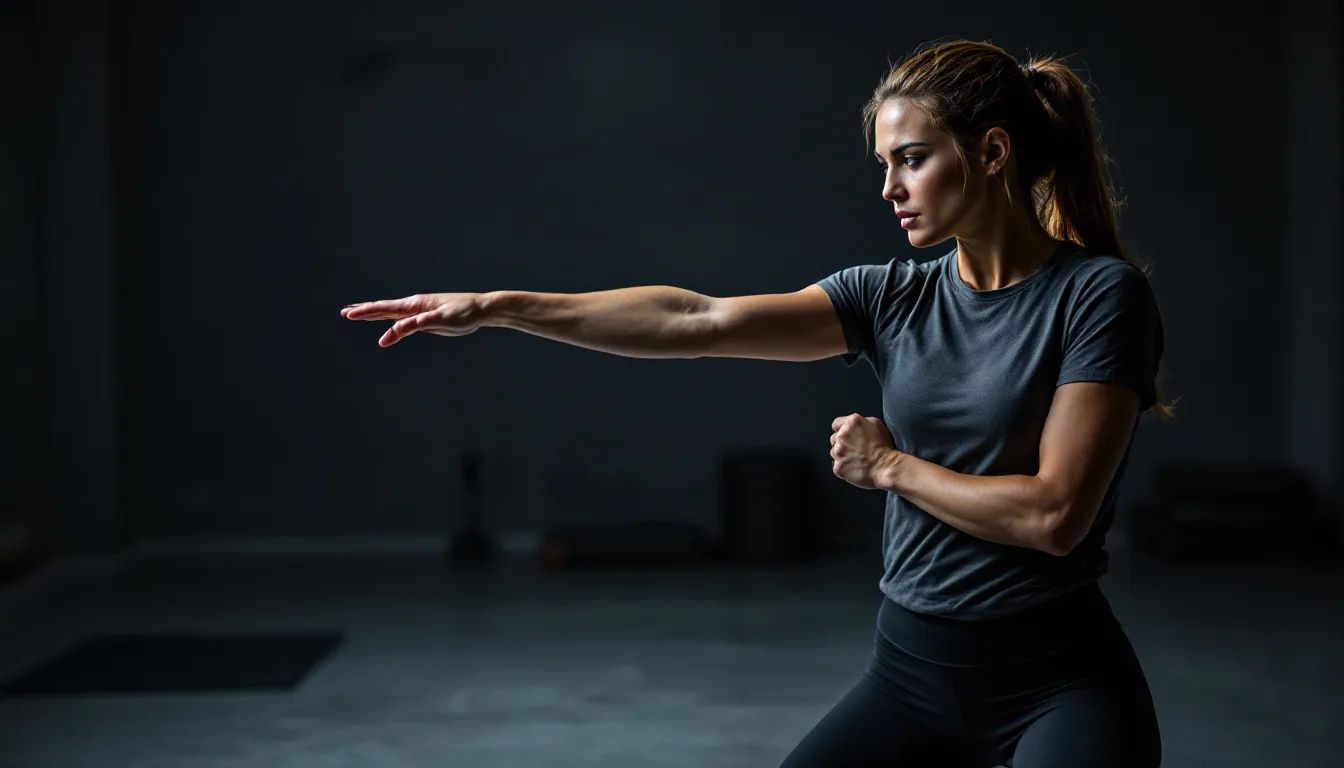
Keep your keys between your fingers. Take a Saturday workshop and drill a wrist escape against an instructor who lets go exactly when the sequence says to. Trust your gut, stay off your phone, park under a streetlight, and otherwise just be careful. That is roughly the sum of self-defense advice most women in Singapore have already received more than once, and almost none of it has ever been tested against someone actually trying to hurt them.
None of it is wrong exactly. Most of it is thin: reactive rather than structural, aimed at a moment that, by the time it arrives, has usually already been decided by everything that happened before it. A woman who has heard all of this and still feels unprepared is not missing information. She is missing an answer that respects what she already knows and says plainly what actually moves the odds.
The honest version: distance and timing decide most of it, before anything physical starts. After that, a short list of simple, blunt techniques, trained until they are automatic and checked against someone who refuses to cooperate. Not a longer list of moves. Not a warning to be careful. And no technique, however well trained, turns a size and strength gap into a guarantee.
Eleven years with the Singapore Police Force and twenty-two more running regional security for MNCs across Asia-Pacific put a specific version of this question in front of me again and again, not whether a woman could learn to fight, but whether anyone was going to tell her the truth about what actually helps. What follows is that answer, in the order it actually matters.
What actually works, at a glance
The short version, before the detail: what gets repeated most is not what actually determines what happens. Here is each common piece of advice next to what is actually doing the work.
| What you're usually told | Why it falls short | What actually helps |
|---|---|---|
| Keep your keys between your fingers | A precise motion, at a range the fight was already decided | Distance and timing, set before anyone gets close |
| Learn a list of self-defense moves | More moves means more decisions for an adrenalized brain | A short list of gross-motor techniques, drilled until automatic |
| Just be careful and trust your gut | True, but too vague to actually train | Reading the specific signals that put you on a shortlist |
| Carry pepper spray or a personal alarm | Most of it is not legal to carry here | Training that does not depend on carrying anything |
| One workshop and you are covered | Never tested against someone who actually resists | Techniques checked against real, non-compliant resistance |

What actually decides the outcome, before anything physical
Selection happens first, and it happens from a distance. An attacker is rarely choosing a specific person so much as reading a stream of people and running a fast, private calculation on each one: how much resistance to expect, weighed against how much time he would have before anyone noticed. That read runs on ordinary, visible things, like how someone walks or where attention settles. Every one of those signals can be changed before the next block. how attackers actually choose their targets.
By the time keys are laced between fingers, that calculation has usually already run and been answered. The advice arrives at the wrong stage, after distance has already closed, aimed at a moment a woman read as a harder target would likely never have reached. Awareness is not a trait some people are born with and others are not. It is the cheapest part of this to change and does the most work of anything in this article. It is also the part almost none of the popular advice actually teaches.
The few techniques that are actually worth learning
When avoidance genuinely fails, what holds up under real adrenaline is not a long list. It is a short one: a handful of strikes to soft, reliably vulnerable points, the eyes, the throat, the groin, the side of a knee. Each uses the body's own structure rather than raw strength, aimed at creating enough shock and space to leave, not at winning a contest. None of those targets care how much an attacker outweighs you, because none of them are defended by muscle.
The list stays short on purpose. Under real stress, a body under-performs on anything that needs fine control and delicate timing, and a technique that only works when performed with precision is a technique likely to fail exactly when it is needed most. What a sound program teaches is a small number of blunt, gross-motor actions, repeated until they stop requiring a decision. More techniques is not more prepared. It is more decisions to make in the two seconds that actually matter.
Why it has to be tested against someone who is not cooperating
A technique that only ever works on a partner who holds still and waits for you to finish is not a technique yet. It is a demonstration. The only way to know whether a strike or an escape actually functions is to try it against someone who is allowed to resist and refuse to cooperate, which looks far messier than a clean demonstration and is the only version that tells you anything true. why realistic training means a partner allowed to not cooperate.
This is the one thing worth being fussy about when choosing a class, more than whether it markets itself to women specifically. Ask what happens in the room when a technique does not work on someone. A specific, slightly uncomfortable answer is a good sign. Hearing that it always works if you do it correctly is not an answer about training. It is an answer about faith, and faith should not be what stands between you and a stranger.
The honest part: size and strength are real
This deserves a straight answer rather than a slogan. On average, a male attacker will be larger and stronger than the woman he has targeted, and no amount of training closes that gap completely. Nobody should leave a single class, or a year of them, believing strength has stopped mattering. It has not. Anyone telling you otherwise is selling you something.
What training does is change the terms of the problem instead of pretending the gap away. Distance and timing do not care about muscle mass. Targeting a vulnerable point does not require matching an attacker pound for pound. And the evidence for what this combination actually does is unusually strong for a field this hard to study: a randomized trial of nearly 900 first-year university women found that a program combining honest risk assessment with verbal and physical resistance training cut the one-year rate of completed rape from 9.8% to 5.2% against a brochure-only control, roughly halving it. That number is not a guarantee, and the researchers never claimed it was one. It sits inside a larger, honest answer to whether any of this works at all, covered in full at does self-defense actually work.
No separate, easier version
None of this changes when the person across from me is a woman rather than a man. The targets are the same targets. The distance principle is the same principle. The real difference is emphasis: more time on being grabbed or held from behind, because that is the entry point most often reported, and closer attention to a size gap that statistically works against the woman in the room more often than not. Everything else about how I teach it stays identical to what anyone else in the room is learning.
A class that waters down the material because the room is mostly women is not being kind. It is deciding, on someone else's behalf, that she cannot handle the real version.
Singapore has almost nothing legal to carry
One more piece of advice worth being blunt about: pepper spray and a stun gun are both tightly controlled, and almost anything else marketed as a personal safety purchase runs into the same law. Self-defense is not an exception, and this is not a grey area worth testing. Exactly where Singapore's right to defend yourself sits, and how much force the law allows sets out the detail.
Which simplifies the decision more than it complicates it. There is no product worth shopping for and no gear comparison worth running. What is left is training, and training is the one part of this nobody can confiscate or take away from you in the moment it matters.
Common questions
Do I need a class specifically for women, or is any self-defense class fine?
Either can work, and neither guarantees anything by itself. What matters is whether the class pressure-tests its techniques against real resistance and spends real time on awareness and distance, not whether the sign on the door says women's self-defense. A mixed class run properly will teach you more than a women's-only class that never leaves choreography. Ask about the method before you ask about the label.
What should I actually look for in a self-defense class for women in Singapore?
Look past the label and check the method: whether any part of the class involves genuine, non-compliant resistance rather than demonstration only, and whether real class time goes to awareness and avoidance rather than technique alone. A studio that can answer both specifically is worth more than one that only markets itself to women.
I am smaller than most men. Is this really worth it?
Yes, and more so, not less. Almost none of the value here depends on matching size or strength. It depends on being read as a harder target before anything starts, and on techniques built around structure rather than muscle once something does. Training moved the measured odds for women smaller than their attacker, in the one trial rigorous enough to test it, without promising anything close to a guarantee.
What if I freeze? Does training actually help with that?
It is the part training helps with most, even though it is the hardest to believe in advance. Freezing happens because the moment is unfamiliar and the brain has no rehearsed response to reach for. Training's job is removing that unfamiliarity, drilling the first move so many times it is still there when clear thinking is not. It will not guarantee you never freeze. It makes freezing shorter, and shorter is usually the difference that matters.
None of this needs a separate, easier version because the room is mostly women, and none of it needs a reason to believe something is about to happen tonight. It needs the same training anyone gets here, built the same way for anyone who walks through the door. That training happens in the room at JF's programmes.